
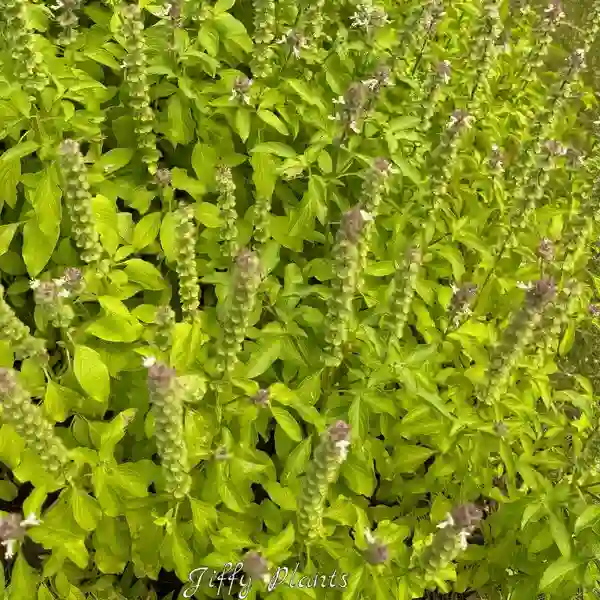
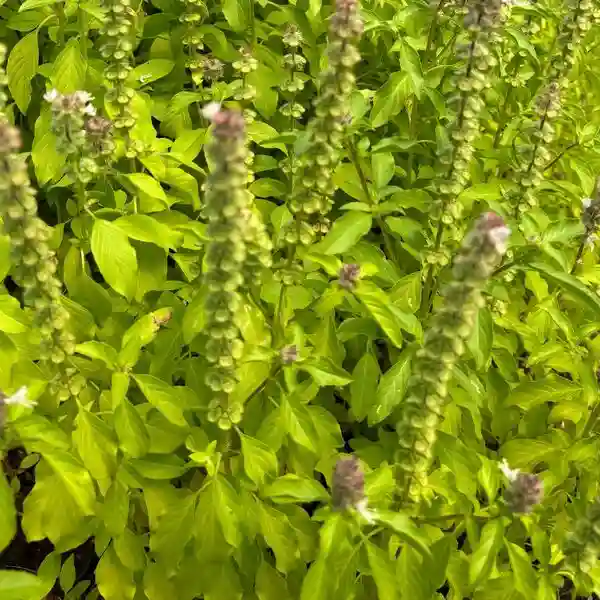
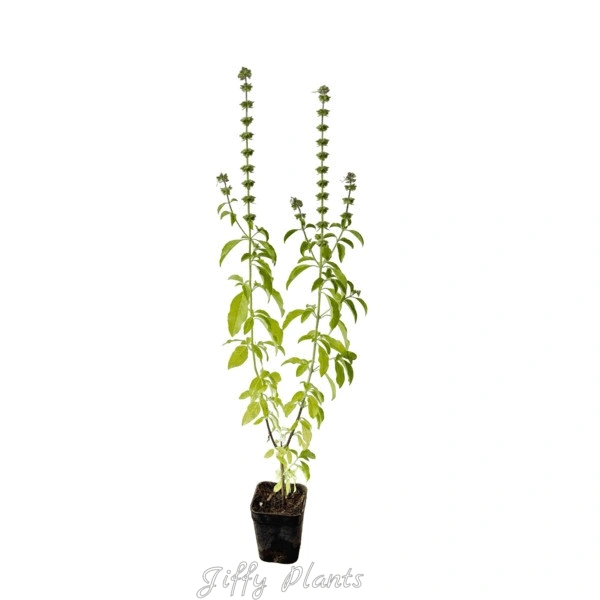
Thai Basil, Tulasi Plant
Original price was: ₹599.00.₹299.00Current price is: ₹299.00.
81 in stock
Size: Single Plant | 2.5″ Pot Included
Here’s a guide to Thai basil plant care, combining information from various sources:
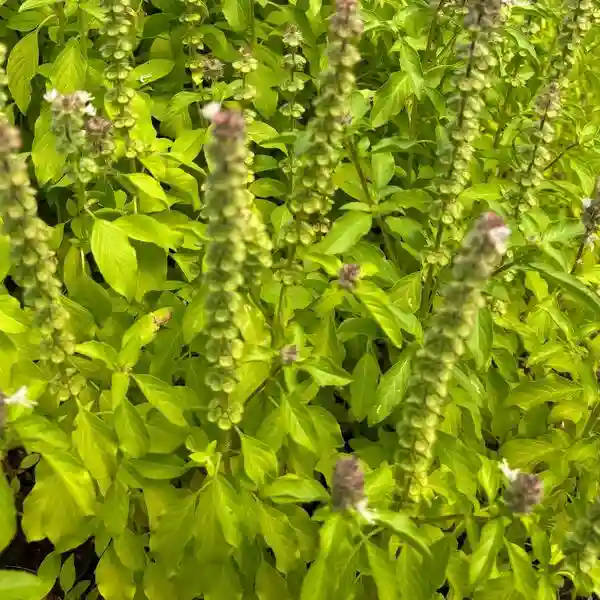
Understanding Thai Basil
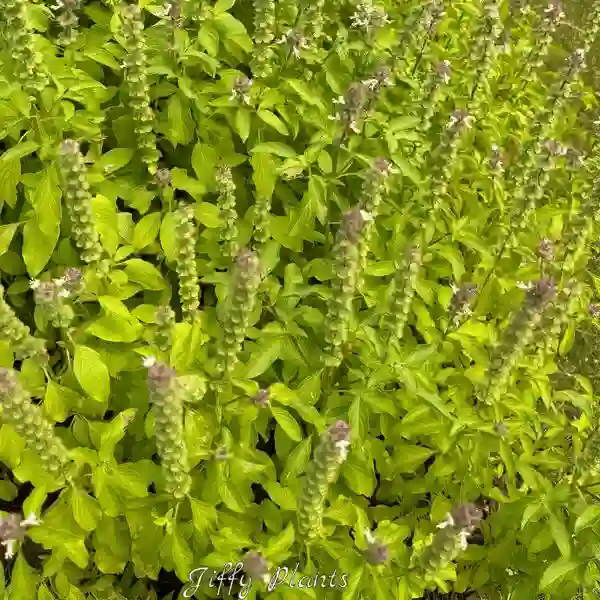
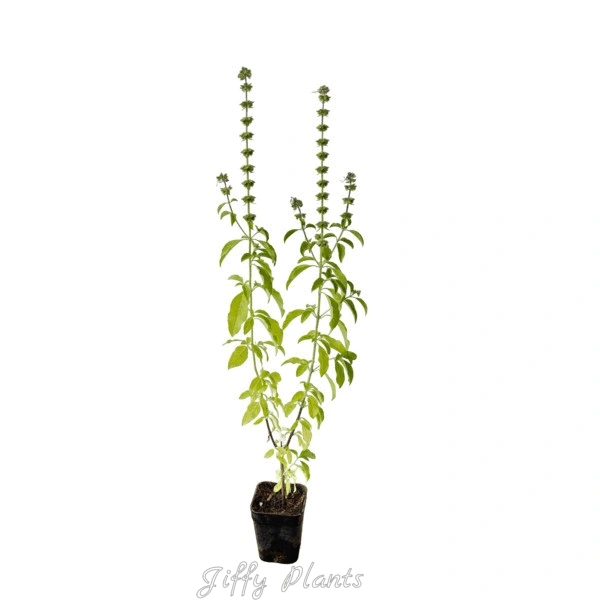
- Distinctive Features: Thai basil stands out with its purple stems, dark green leaves, and a unique flavor profile that blends licorice and spice. It’s a staple in Southeast Asian cuisine.
- Growth Habits: This herb thrives in warm, tropical climates. In cooler regions, it’s often grown as an annual.
General Care Tips
- Sunlight: Thai basil loves sunshine! Aim for at least 6 hours of direct sunlight daily. If you live in a very hot area, some afternoon shade can be beneficial.
- Watering: Keep the soil consistently moist, but not soggy. Water deeply when the top inch of soil feels dry. Overwatering can lead to yellowing leaves and root rot.
- Soil: Well-draining soil is crucial. A slightly acidic pH is ideal. If you’re growing in pots, ensure they have drainage holes.
- Temperature: Thai basil prefers warm temperatures. It’s sensitive to frost, so protect it from cold snaps.
- Fertilizing: If your soil is rich, you may not need to fertilize often. A balanced fertilizer or a liquid seaweed/fish fertilizer can be used sparingly during the growing season.
- Pinching and Harvesting: Pinch off flower buds to encourage bushier growth and more leaves. Harvest leaves regularly to stimulate production. When harvesting, cut above a node (where leaves grow from the stem).
Growing Indoors
- Location: A sunny, south-facing window is best.
- Potting: Use a pot that’s at least 6 inches deep with drainage holes.
- Soil: Choose a well-draining potting mix.
- Watering: Water when the top inch of soil feels dry.
- Light: If you don’t have enough natural light, consider using grow lights.
Troubleshooting
- Yellowing Leaves: Overwatering, nutrient deficiencies, or pests can cause yellowing leaves.
- Pests: Aphids, slugs, and spider mites can be problematic. Use insecticidal soap or neem oil to control pests.
- Diseases: Root rot and fungal diseases can occur in overly wet conditions. Ensure good drainage and air circulation.
Additional Tips
- Companion Planting: Thai basil grows well with tomatoes, peppers, and other herbs like rosemary.
- Propagation: You can propagate Thai basil from seeds or cuttings.
- Harvesting Seeds: If you want to collect seeds, allow some flowers to mature and dry.
Let me know if you have any other questions!
| Color | |
|---|---|
| Colour | |
| Price | |
| Type |
Only logged in customers who have purchased this product may leave a review.
Related products
-
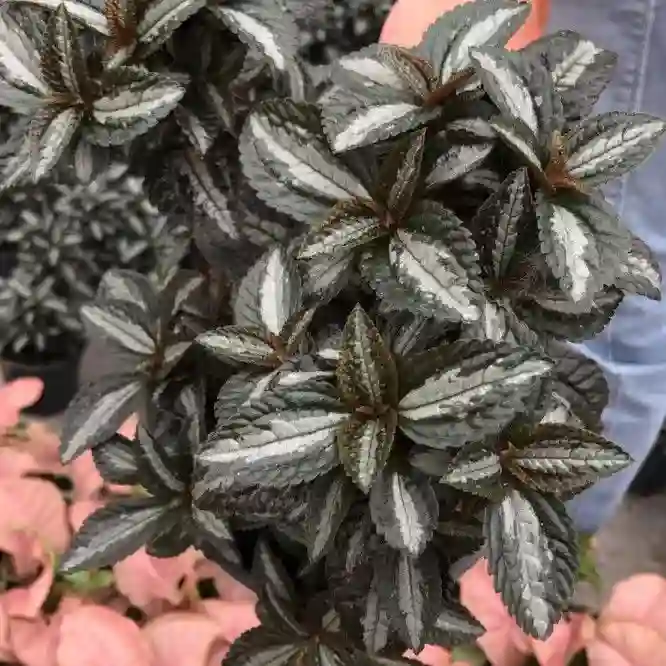
Pilea involucrata ‘Norfolk’ – Friendship Plant
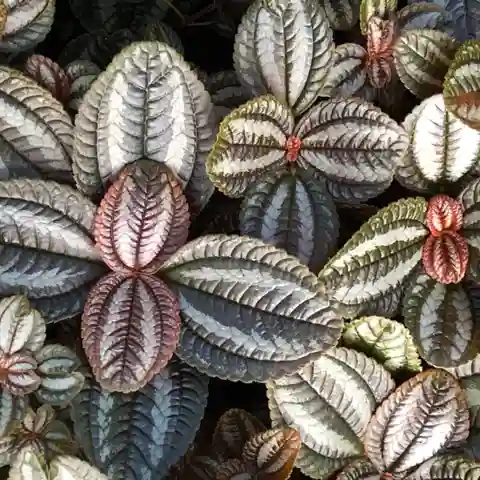
Original price was: ₹450.00.₹199.00Current price is: ₹199.00.Add to cartSize: Single Plant | 2.5″ Pot Included | Free Shipping The Pilea involucrata ‘Norfolk’, commonly known as the Friendship Plant, is a delightful houseplant celebrated for its unique, velvety, quilted foliage. The leaves have a rich texture and a beautiful color palette, with deep green and bronze tones on the upper surface and a reddish-purple …
-
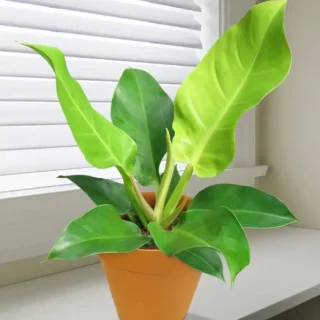
Philodendron Moonshine
Original price was: ₹1,250.00.₹249.00Current price is: ₹249.00.Add to cartSelling size: Single plant | Pot included | Secure Packing The Philodendron Moonshine (often also called ‘Moonlight’) is a popular hybrid known for its vibrant, almost glowing, chartreuse-colored leaves. It has an upright, self-heading growth habit, so unlike many vining philodendrons, it doesn’t need a trellis or pole. Here is a comprehensive guide to caring …
-
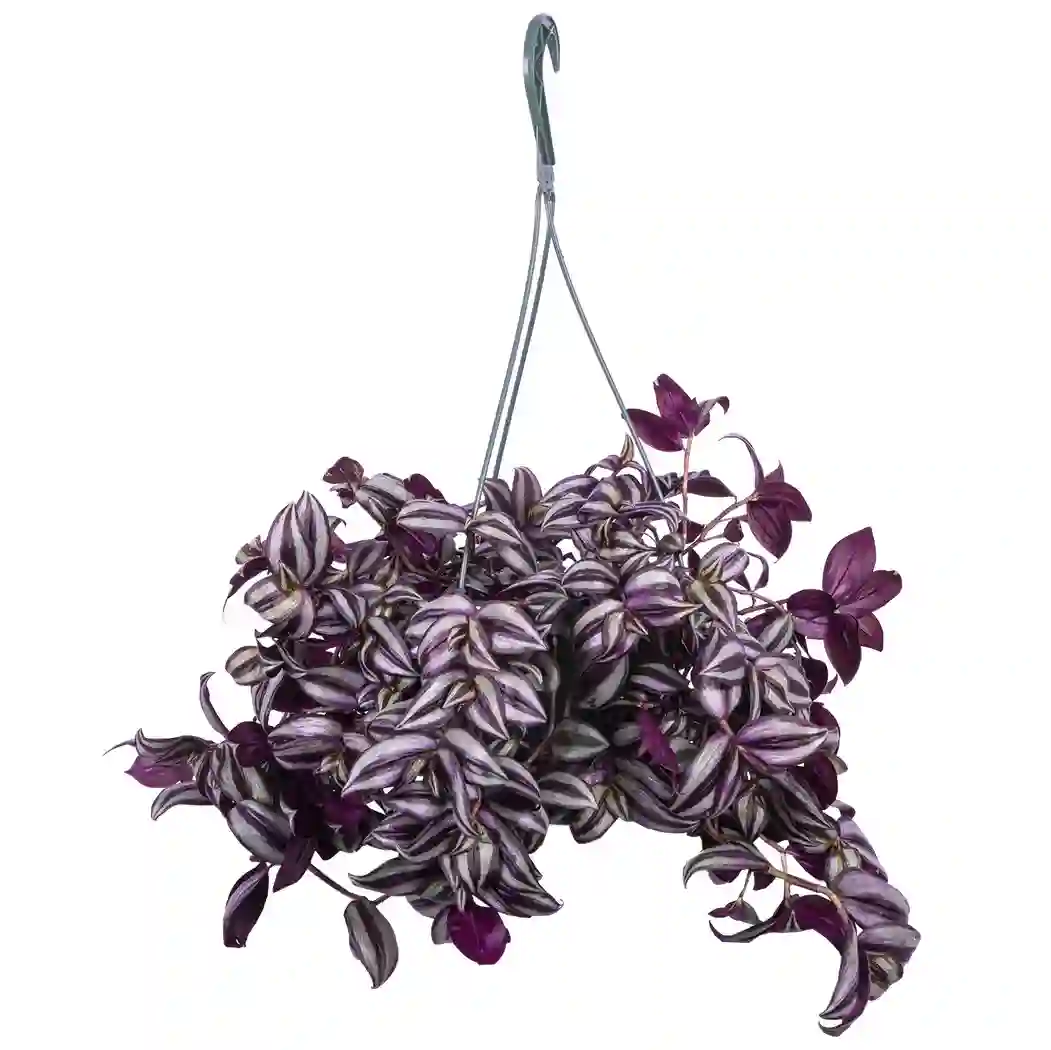
Wandering Jew Plant
Original price was: ₹305.00.₹149.00Current price is: ₹149.00.Add to cartSelling size: This plant comes in a 2.5″ Square pot The Wandering Jew Plant, also known as the Tradescantia! They’re such vibrant and easy-to-love plants. To keep yours thriving, here’s a rundown of Wandering Jew Plant care needs: Light: They absolutely love bright, indirect sunlight. Think of a spot near an east- or west-facing window …
-
String Of Nickels (Dischidia nummularia)
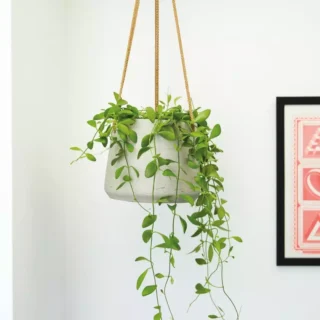
Select options This product has multiple variants. The options may be chosen on the product pageSelling size: Well rooted plant in a Jiffy bag The Dischidia nummularia, commonly known as the String of Nickels or Button Orchid, is a delightful and easy-to-care-for trailing epiphyte. Its common name comes from its small, round, coin-shaped leaves that densely cover its long, slender stems. As a relative of the Hoya, it shares a …
-
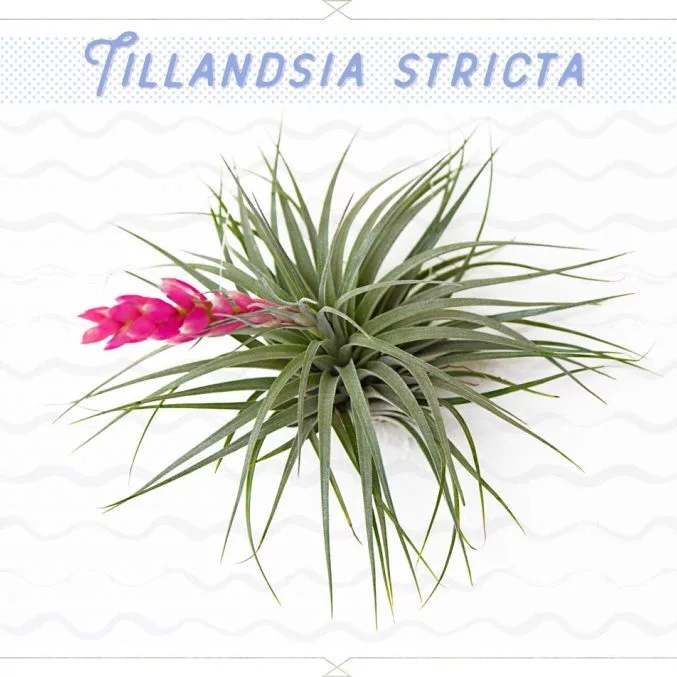
Tillandsia Stricta (Air plant)
Original price was: ₹400.00.₹199.00Current price is: ₹199.00.Add to cartSelling size: Single plant | Secure Packing The Tillandsia Stricta (Air plant) is one of the most popular and adaptable species of air plants, known for its soft, green-silver foliage and beautiful blooms. Like all air plants, it is epiphytic, meaning it absorbs all its water and nutrients through its leaves from the air, not …
-
Spanish Moss Air Plant
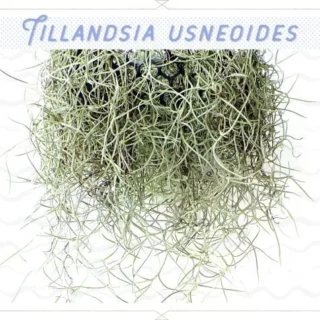
Price range: ₹49.00 through ₹525.00Select options This product has multiple variants. The options may be chosen on the product pageSelling size: PLEASE CHOOSE Spanish Moss Air Plant – CARE INSTRUCTIONS Scientific name: Tillandsia usneoides Synonyms: Old man’s beard, Spanish Moss, French Hair, Spanish Beard Spanish Moss is a delicate silvery-grey air plant that is often used to hang in trees or as a gorgeous decor piece without the need for soil. Despite its name, Spanish Moss …
 If you need any assistance, I'm always here. Have you found what you were looking for?
Reviews
There are no reviews yet.