
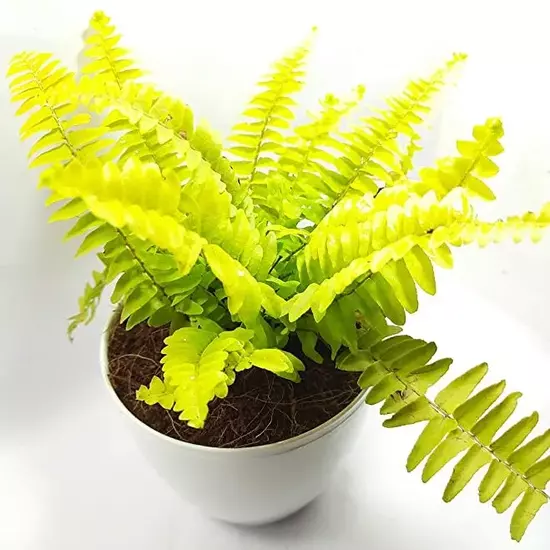
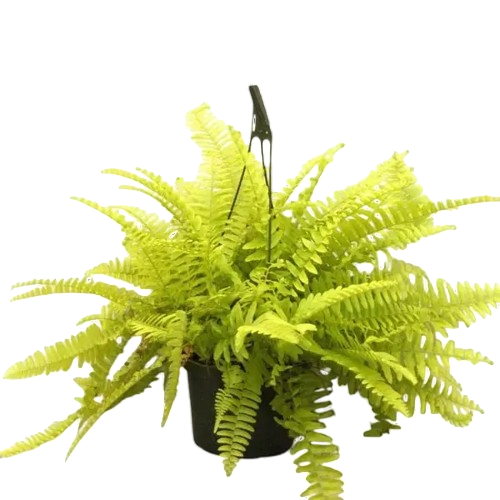
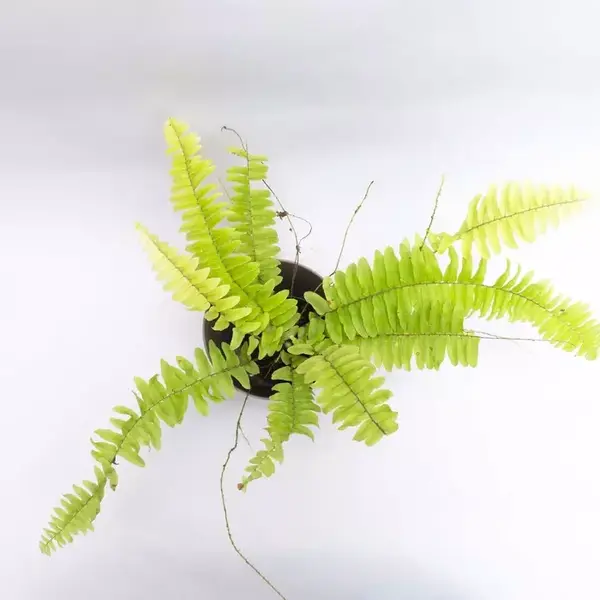
Golden boston fern
Original price was: ₹359.00.₹249.00Current price is: ₹249.00.
1 in stock
Selling size: Well rooted plant | 2.5 inch square pot included |Secure Packing
The Golden Boston Fern (Nephrolepis exaltata ‘Aurea’) is a striking cultivar of the common Boston Fern. Its care requirements are very similar to its green cousin, but with a slight adjustment for its golden-yellow foliage.

Here is a guide to keeping your Golden Boston Fern healthy and vibrant:
1. Light
- Bright, Indirect Light is Best: The golden color will be most vibrant in bright, filtered light.
- Avoid Direct Sun: Direct, intense sunlight can easily scorch the delicate fronds, turning them brown and crispy.
- Tolerates Lower Light: It can tolerate partial shade or less intense light, but the growth will be slower, and the foliage may appear less golden and more green.
- Ideal Placement: Near a north or east-facing window, or several feet away from a bright south or west-facing window.
2. Watering
- Keep Soil Consistently Moist: The key to a happy fern is consistently moist, but not soggy, soil. It dislikes drying out completely.
- Check Before Watering: Water thoroughly when the top $1text{ inch}$ of soil feels just dry to the touch.
- Do Not Overwater: Ensure your pot has excellent drainage to prevent the roots from sitting in water, which leads to root rot.
- Reduce in Winter: Decrease watering frequency in the fall and winter when the plant’s growth naturally slows down.
3. Humidity
- High Humidity is Crucial: As a tropical plant, the Boston Fern craves high humidity (ideally above 50%). Low humidity is the most common reason for crispy, brown frond tips.
- How to Increase Humidity:
- Pebble Tray: Place the pot on a tray filled with pebbles and a little water, ensuring the pot bottom does not sit in the water.
- Misting: Mist the fronds regularly, especially during dry winter months when indoor heating is running. Use distilled or filtered water to prevent mineral spots.
- Location: Place the plant in a naturally humid room, like a bathroom or kitchen.
- Group Plants: Grouping plants together helps create a localized microclimate of higher humidity.
4. Soil and Potting
- Soil: Use a light, well-draining, and moisture-retentive potting mix. A peat moss or coco coir-based mix with perlite is ideal.
- Repotting: Repot in the spring every one to two years, or when the plant becomes root-bound (roots are tightly circling the inside of the pot). Only move up one pot size at a time.
5. Temperature
- Warm Temperatures: The Golden Boston Fern prefers average indoor temperatures between $65^{circ}text{F}$ and $75^{circ}text{F}$ ($18^{circ}text{C}$ and $24^{circ}text{C}$).
- Avoid Extremes: Keep it away from cold drafts (like doorways or open windows) and heat sources (like radiators or heat vents), as sudden temperature changes or dry air can cause the fronds to drop.
6. Fertilizer
- Fertilize Sparingly: Ferns are light feeders.
- Frequency: Feed once a month during the growing season (spring and summer) using a balanced, water-soluble houseplant fertilizer diluted to half or quarter strength.
- No Fertilizer in Winter: Stop feeding entirely during the fall and winter months.

7. Maintenance and Troubleshooting
- Pruning: Trim off any dead, yellow, or entirely brown fronds at the base with clean, sharp scissors to encourage new growth and maintain a tidy appearance.
- Brown Tips: The most common issue. This is almost always due to low humidity or inconsistent watering. Increase misting or use a pebble tray, and ensure the soil is not drying out between waterings.
- Pet Safety: Golden Boston Ferns (like all Nephrolepis ferns) are listed as non-toxic to cats and dogs by the ASPCA, making them a safe choice for most households with pets. However, ingesting any large amount of non-food plant matter can still cause minor stomach upset.
Only logged in customers who have purchased this product may leave a review.
Related products
-
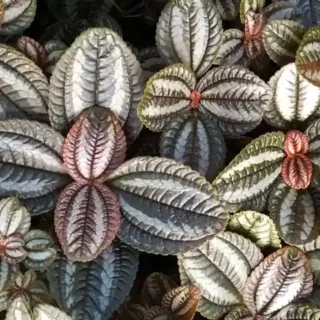
Pilea involucrata ‘Norfolk’ – Friendship Plant
Original price was: ₹450.00.₹199.00Current price is: ₹199.00.Add to cartSize: Single Plant | 2.5″ Pot Included | Free Shipping The Pilea involucrata ‘Norfolk’, commonly known as the Friendship Plant, is a delightful houseplant celebrated for its unique, velvety, quilted foliage. The leaves have a rich texture and a beautiful color palette, with deep green and bronze tones on the upper surface and a reddish-purple …
-
Golden Pothos
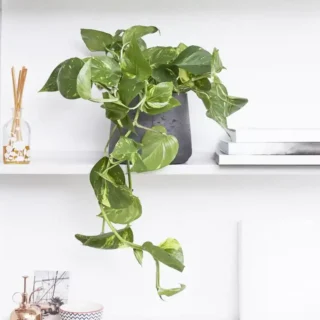
Original price was: ₹355.00.₹99.00Current price is: ₹99.00.Add to cartSelling size : Well rooted plant | 2.5″ pot included The Golden Pothos (Epipremnum aureum), also known as Devil’s Ivy, is one of the most popular and easiest houseplants to care for, making it an excellent choice for beginners. It’s a vining plant with heart-shaped leaves that are a vibrant green, often with splashes or …
-
Dischidia Oiantha plant
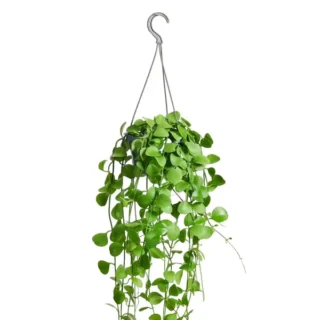
Original price was: ₹695.00.₹375.00Current price is: ₹375.00.Add to cartPlant Size: Single plant | 2.5″ Pot Included | Free Shipping | Secure Packing The Dischidia oiantha, often referred to as a “Hoya cousin,” is a charming, easy-to-care-for epiphyte with trailing vines and small, oval, succulent-like leaves. It’s a great choice for hanging baskets or for adding a touch of whimsy to a shelf. Here …
-
Philodendron Mexicanum
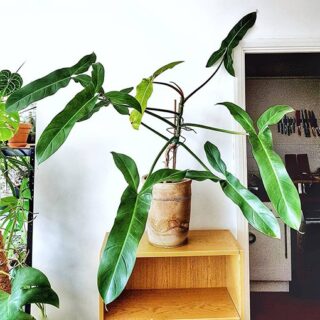
Original price was: ₹1,090.00.₹749.00Current price is: ₹749.00.Add to cartSelling size: Single Plant | Pot included The Philodendron mexicanum is a beautiful vining plant known for its long, arrow-shaped leaves with a striking deep maroon or reddish underside. As its name suggests, it is native to the tropical forests of Mexico. It’s a relatively easy-to-care-for plant, especially for those familiar with other vining philodendrons. …
-
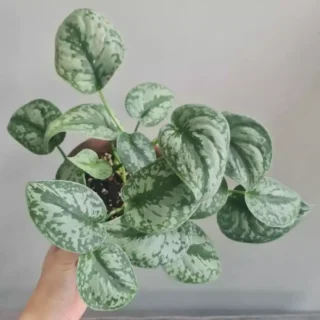
Scindapsus Pictus Exotica
Original price was: ₹380.00.₹99.00Current price is: ₹99.00.Add to cartSelling size: Single Plant | 2.5″ Pot Included The Scindapsus Pictus Exotica, also known as the silver pothos, is a houseplant with large, dark green leaves that have silver spots and mottling. Here’s a guide to caring for your Scindapsus pictus Exotica plant: Light: Prefers bright, indirect light. An east or west-facing window that’s about …
-
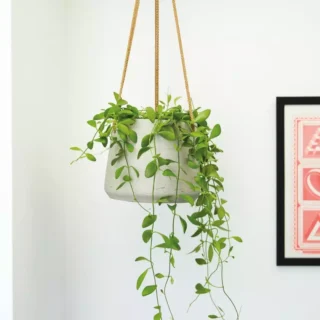
String Of Nickels (Dischidia nummularia)
Select options This product has multiple variants. The options may be chosen on the product pageSelling size: Well rooted plant in a Jiffy bag The Dischidia nummularia, commonly known as the String of Nickels or Button Orchid, is a delightful and easy-to-care-for trailing epiphyte. Its common name comes from its small, round, coin-shaped leaves that densely cover its long, slender stems. As a relative of the Hoya, it shares a …
-
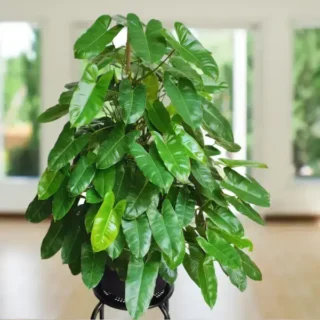
Philodendron Burle Marx Plant
Original price was: ₹485.00.₹149.00Current price is: ₹149.00.Add to cartSelling size: Single plant | Pot Included | Secure Packing The Philodendron Burle Marx is a fantastic and relatively easy-to-care-for plant, known for its glossy, spade-shaped leaves and dense, clumping growth. It’s often recommended as a great choice for beginner houseplant owners. Here is a comprehensive care guide for your Philodendron Burle Marx: Light …
-
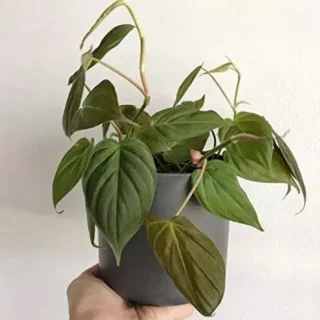
Philodendron Mican plant
Original price was: ₹650.00.₹99.00Current price is: ₹99.00.Add to cartSelling size: A well rooted plant | 2.5″ Pot Included The Philodendron Micans (Philodendron hederaceum ‘Micans’), also known as the Velvet-Leaf Philodendron, is a popular, easy-care trailing or climbing houseplant prized for its unique, velvety, heart-shaped leaves that emerge a beautiful chartreuse/pink and mature to a deep, iridescent, bronze-green with hints of purple. Here is …
 If you need any assistance, I'm always here. Have you found what you were looking for?
Reviews
There are no reviews yet.