
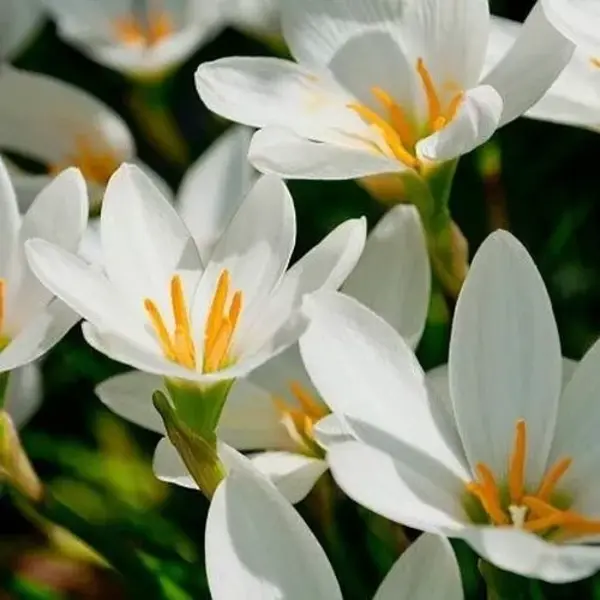
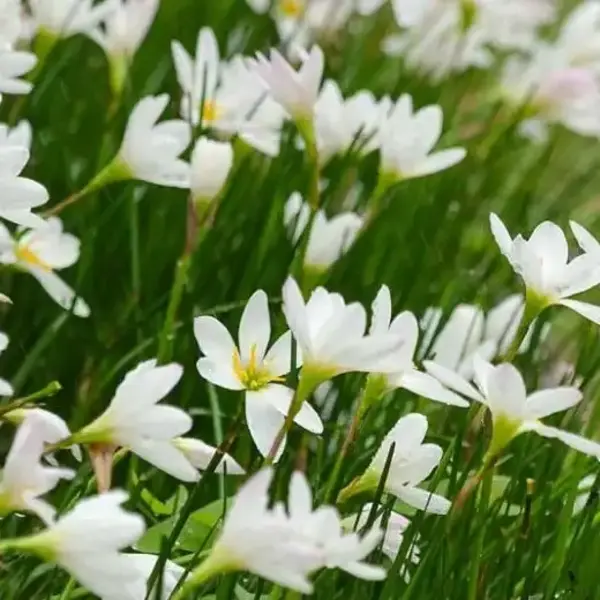
Rain Lily White (Zephyranthes Candida)
Original price was: ₹95.00.₹19.00Current price is: ₹19.00.
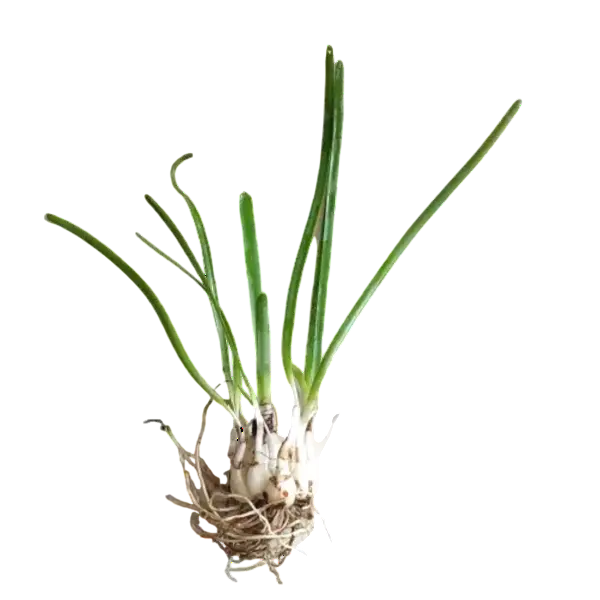
Selling size: Single White/Pink mixed bulb | Secure Packing
Rain Lily White, scientifically known as Zephyranthes candida, is a charming perennial bulb plant adored for its delicate, star-shaped white flowers that bloom beautifully after showers. Often called Fairy Lily or White Zephyr Lily, this plant is a popular choice for borders, pots, lawns, and mass plantings. It thrives with minimal care and rewards the grower with bursts of blooms during rainy seasons. With the right growing conditions, Rain Lily White can naturalize quickly and form beautiful clusters that brighten any garden. Here is a detailed 600-word care guide.

Rain Lily White (Zephyranthes candida) Care Guide :
Light Requirements
Rain Lily White prefers full sun to partial shade. For abundant flowering, keep the plant where it receives at least 4–6 hours of direct sunlight daily. Though it can tolerate some shade, excessive shade reduces flower production and leads to longer, weaker foliage. In very hot climates, a bit of afternoon shade prevents leaf tips from burning. When grown indoors, place the pot near a bright window or balcony where natural light is strong.
Watering
As the name suggests, Rain Lily responds beautifully to rains. Watering should mimic natural rainfall patterns. Keep the soil moderately moist, especially during the active growing and flowering season (monsoon months). Water thoroughly when the soil’s top layer feels dry, allowing excess water to drain out. Avoid waterlogging because the bulbs may rot in stagnant water. During winter or dormant periods, reduce watering significantly—just enough to keep the soil slightly moist. Overwatering during dormancy is the most common reason for bulb rot.
Soil Mix
Zephyranthes candida thrives in well-draining, loose, sandy or loamy soil. A suitable potting mix includes:
-
40% garden soil
-
30% river sand or perlite
-
30% compost or cow manure
This combination ensures proper airflow around the bulbs and prevents fungal infections. When planting in the ground, choose raised beds or borders where water drains quickly. Avoid heavy clay soils unless improved with sand and organic matter.

Temperature & Humidity
Rain Lily White grows best in warm climates with temperatures between 20°C and 32°C. It handles heat well but is sensitive to frost. In regions with cold winters, keep the bulbs in pots and shift them indoors during extremely low temperatures. Humidity levels between 40% and 70% are ideal. This plant thrives in tropical and subtropical climates, making it perfect for Indian gardens.
Fertilization
During the growing season, feed the plant once every 45–60 days with a balanced fertilizer. Options include:
-
NPK 10-10-10
-
Vermicompost
-
Well-decomposed cow manure
Avoid high-nitrogen fertilizers as they promote leaf growth at the expense of flowers. A light application of bone meal or bulb-boosting fertilizer enhances flowering and bulb health. Overfertilization can burn roots and reduce blooming.
Planting Depth & Spacing
When planting Rain Lily bulbs, place them 2–3 cm deep with the pointed side facing upward. For mass planting or landscape borders, maintain a spacing of 5–8 cm between bulbs. Closer planting helps create a fuller look, especially in lawns or pathway edges.
Pruning & Maintenance
Rain Lilies require minimal maintenance. Remove dried or yellowing leaves to keep the plant tidy and disease-free. Do not trim green leaves aggressively, as the bulbs store energy through them. After flowering, allow seed pods to mature if you want natural propagation. Every 2–3 years, clumps can be divided to avoid overcrowding and encourage fresh blooms.

Pests & Diseases
Zephyranthes candida is generally resistant to pests. Occasionally, you may notice:
-
Snails
-
Slugs
-
Aphids
-
Fungal infections in overwatered soil
Use neem oil spray every 10–14 days during monsoon as a preventive measure. Proper drainage is the best way to prevent bulb rot and fungal issues.
Propagation
Propagation is extremely easy through bulbs or bulb offsets. Separate small bulbs from the mother clump and replant them immediately. They establish quickly and begin blooming the next season. Rain Lilies also self-seed in suitable conditions, spreading naturally.
Conclusion
Rain Lily White (Zephyranthes candida) is a delightful, low-maintenance flowering plant that brings elegance to any garden with its pure white blooms. With plenty of sunlight, moderate watering, good soil drainage, and occasional feeding, this beautiful plant will thrive year after year. Whether grown in pots, lawns, borders, or rock gardens, its rain-triggered blooms add a magical touch to outdoor spaces.
| Color | |
|---|---|
| Colour | |
| Price | |
| Type |
Only logged in customers who have purchased this product may leave a review.
Related products
-
Pellionia repens var. pulchra
Original price was: ₹325.00.₹149.00Current price is: ₹149.00.Add to cartSelling size: Well rooted plant in a jiffy bag | Secure Packing The Pellionia repens var. pulchra, often called the Trailing Watermelon Begonia, is a beautiful and easy-to-care-for trailing plant. Its common name comes from the striking, patterned leaves that resemble the rind of a watermelon. Despite the name, it is not a true begonia …
-
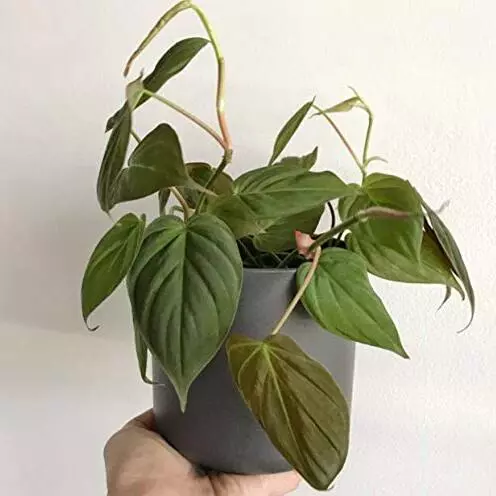
Philodendron Mican plant
Original price was: ₹650.00.₹99.00Current price is: ₹99.00.Add to cartSelling size: A well rooted plant | 2.5″ Pot Included The Philodendron Micans (Philodendron hederaceum ‘Micans’), also known as the Velvet-Leaf Philodendron, is a popular, easy-care trailing or climbing houseplant prized for its unique, velvety, heart-shaped leaves that emerge a beautiful chartreuse/pink and mature to a deep, iridescent, bronze-green with hints of purple. Here is …
-
Dischidia nummularia (Pebble Beach/ Button Orchid)
Original price was: ₹655.00.₹375.00Current price is: ₹375.00.Add to cartPlant Size: Single plant | 2.5″ Pot Included | Free Shipping he Dischidia nummularia, commonly known as the String of Nickels, Pebble Beach plant, or Button Orchid, is a charming epiphyte with trailing stems covered in small, round, succulent-like leaves. It’s a great choice for hanging baskets and is known for being relatively easy to …
-
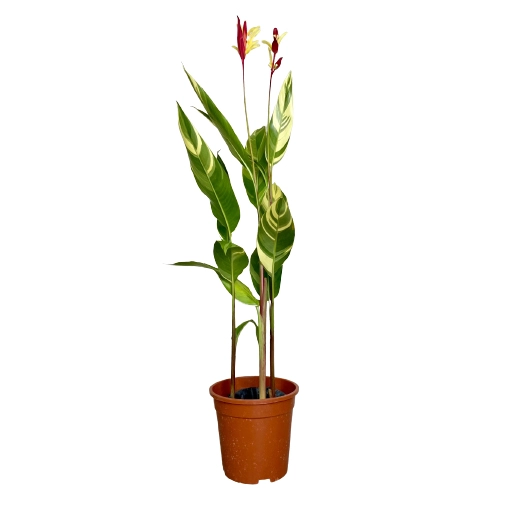
Heliconia Variegated – Super Rare
Original price was: ₹2,599.00.₹1,099.00Current price is: ₹1,099.00.Add to cartPlant size: Single plant | Pot Included | Free shipping The Variegated Heliconia (often a cultivar of Heliconia psittacorum, like ‘Lady Di’ or ‘Golden Torch’) is a striking tropical plant known for its banana-like leaves splashed with stripes of cream, yellow, or white. It is a demanding plant, requiring specific tropical conditions to thrive, especially …
-

String Of Nickels (Dischidia nummularia)
Select options This product has multiple variants. The options may be chosen on the product pageSelling size: Well rooted plant in a Jiffy bag The Dischidia nummularia, commonly known as the String of Nickels or Button Orchid, is a delightful and easy-to-care-for trailing epiphyte. Its common name comes from its small, round, coin-shaped leaves that densely cover its long, slender stems. As a relative of the Hoya, it shares a …
-
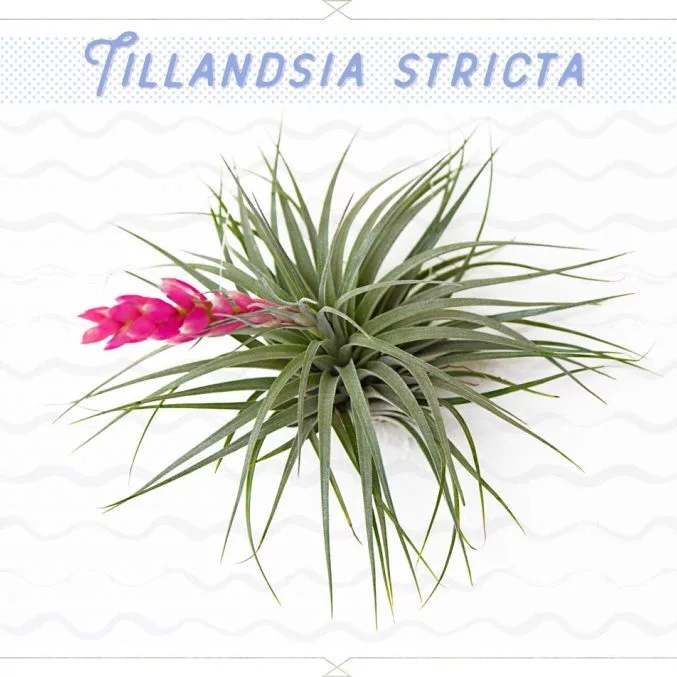
Tillandsia Stricta (Air plant)
Original price was: ₹400.00.₹199.00Current price is: ₹199.00.Add to cartSelling size: Single plant | Secure Packing The Tillandsia Stricta (Air plant) is one of the most popular and adaptable species of air plants, known for its soft, green-silver foliage and beautiful blooms. Like all air plants, it is epiphytic, meaning it absorbs all its water and nutrients through its leaves from the air, not …
-
Chlorophytum Spider Live Plant
Original price was: ₹249.00.₹99.00Current price is: ₹99.00.Add to cartSelling size: Well rooted Single plant | 2.5″ Pot included Chlorophytum Spider, also the Spider Plant is an impressive houseplant which is the perfect plant for any beginner. A NASA certified air purifier, its long, green foliage with white variegations look good in both hanging planters and as desktop setups. In favourable conditions, it blooms …
-
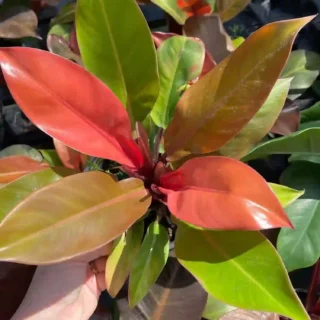
Philodendron ‘Prince of Orange’
Price range: ₹249.00 through ₹620.00Select options This product has multiple variants. The options may be chosen on the product pageSelling Size : Single Plant | Pot Included | Secure Packing The Philodendron ‘Prince of Orange’ is a stunning and popular hybrid known for its vibrant, ever-changing leaf colors. New leaves emerge as a brilliant orange or coppery color, and as they mature, they transition to a lime green, then a deep, glossy green. It …


 If you need any assistance, I'm always here. Have you found what you were looking for?
Reviews
There are no reviews yet.