Selling size: Single plant | Pot included | Secure Packing
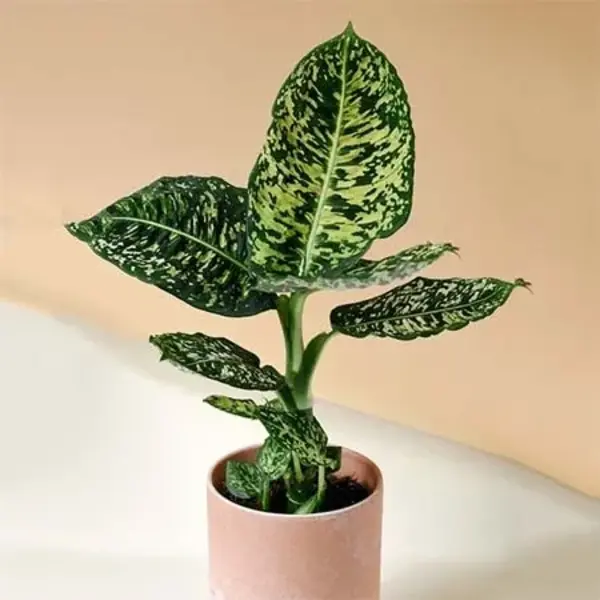
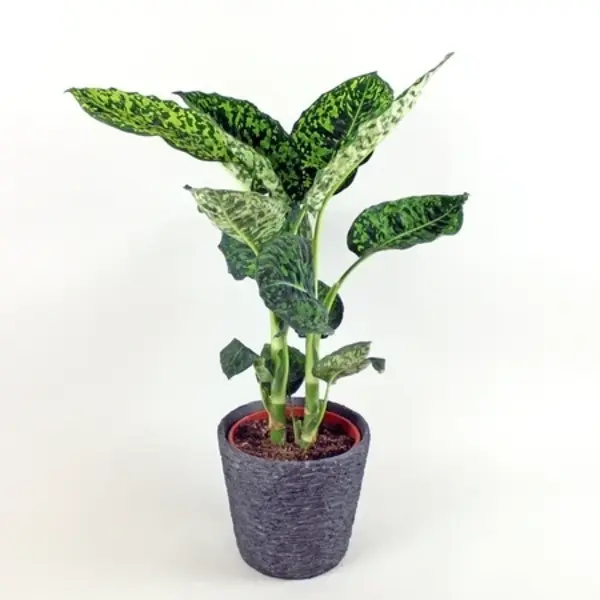
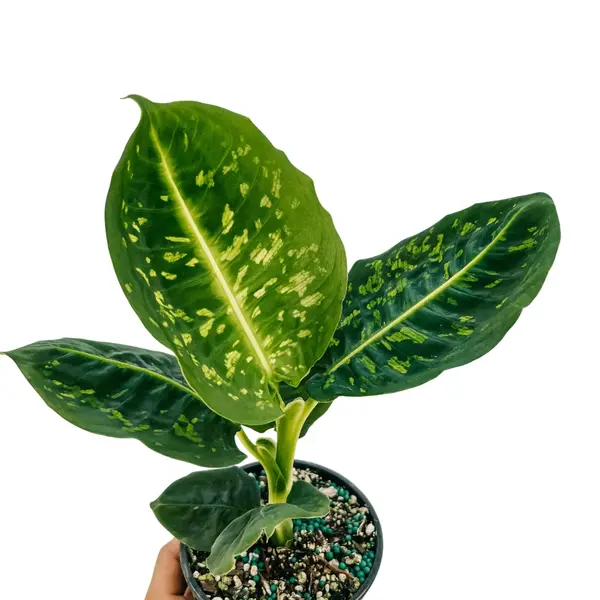
The Dieffenbachia Reflector is a popular and striking houseplant known for its dark green leaves dappled with reflective, lighter green, or chartreuse spots. Like all Dieffenbachia, it is commonly called “dumb cane”.
Bright, Indirect Light is Best: The plant thrives in bright, filtered sunlight, which is necessary to maintain its vibrant variegation.
Avoid Direct Sun: Direct sun, especially harsh afternoon sun, will scorch the leaves and cause the color to fade.
Tolerates Medium Light: It can survive in lower light, but the growth will slow, and the leaf patterns may become less distinct.
Rotation: Rotate the pot occasionally to ensure even growth.
2. Watering
Keep Soil Evenly Moist: Dieffenbachia prefers to stay consistently moist but should never be waterlogged or soggy.
Water When Top Soil is Dry: Water thoroughly when the top 1 to 2 inches of soil feel dry to the touch.
Avoid Overwatering: Overwatering is the most common cause of yellowing leaves and root rot. Always ensure the pot has excellent drainage and empty any excess water from the saucer.
DIEFFENBACHIA REFLECTOR
3. Humidity
Prefers High Humidity: As a tropical plant, it will appreciate higher humidity levels (ideally 60% or higher).
Tolerates Average Humidity: The ‘Reflector’ is generally tolerant of average household humidity (around 40-50%).
Signs of Low Humidity: Brown, crispy leaf edges or tips.
To Increase Humidity: Use a humidifier nearby, or place the plant in a naturally humid room like a bright bathroom or kitchen.
DIEFFENBACHIA REFLECTOR
4. Temperature
Warmth is Essential: Keep the plant in warm temperatures between 65°F to 80°F (18°C–27°C).
Avoid Cold: Do not expose it to temperatures below 60°F (15°C).
No Drafts: Keep it away from cold drafts from windows, exterior doors, and heating or air conditioning vents, as sudden temperature fluctuations can cause leaf drop.
5. Soil and Fertilizer
Well-Draining Soil: Use a rich, fertile, and well-draining potting mix. A standard indoor potting mix amended with perlite and/or orchid bark will work well.
Fertilize During Growing Season: Feed the plant with a balanced, liquid houseplant fertilizer once a month during the spring and summer.
Do Not Fertilize in Winter: Discontinue feeding in the fall and winter when growth slows down.
6. Toxicity Warning
Dieffenbachia (Dumb Cane) is toxic to humans and pets if ingested.
The plant contains insoluble calcium oxalate crystals. Chewing on or ingesting the plant can cause:
Intense oral irritation and burning.
Swelling of the mouth, tongue, and throat (which is why it’s nicknamed “Dumb Cane,” as it can temporarily impair speech).
Drooling, vomiting, and difficulty
swallowing.
Safety Precautions:
Keep the plant well out of reach of children and pets.
Wear gloves when pruning or handling the plant’s sap.
Wash your hands thoroughly after contact. If ingestion is suspected, contact your veterinarian or a poison control center immediately.
Color
Colour
Price
Type
Reviews
There are no reviews yet.
Only logged in customers who have purchased this product may leave a review.



 If you need any assistance, I'm always here. Have you found what you were looking for?

Reviews
There are no reviews yet.